 Print
Print AI Optimization (AIO) vs Search Engine Optimization (SEO): What's the difference?
You've likely realized the importance of appearing in AI-generated answers from tools like ChatGPT and Perplexity. This is where AI SEO comes in—a complementary approach to traditional SEO, focusing on increasing visibility in AI-driven results.
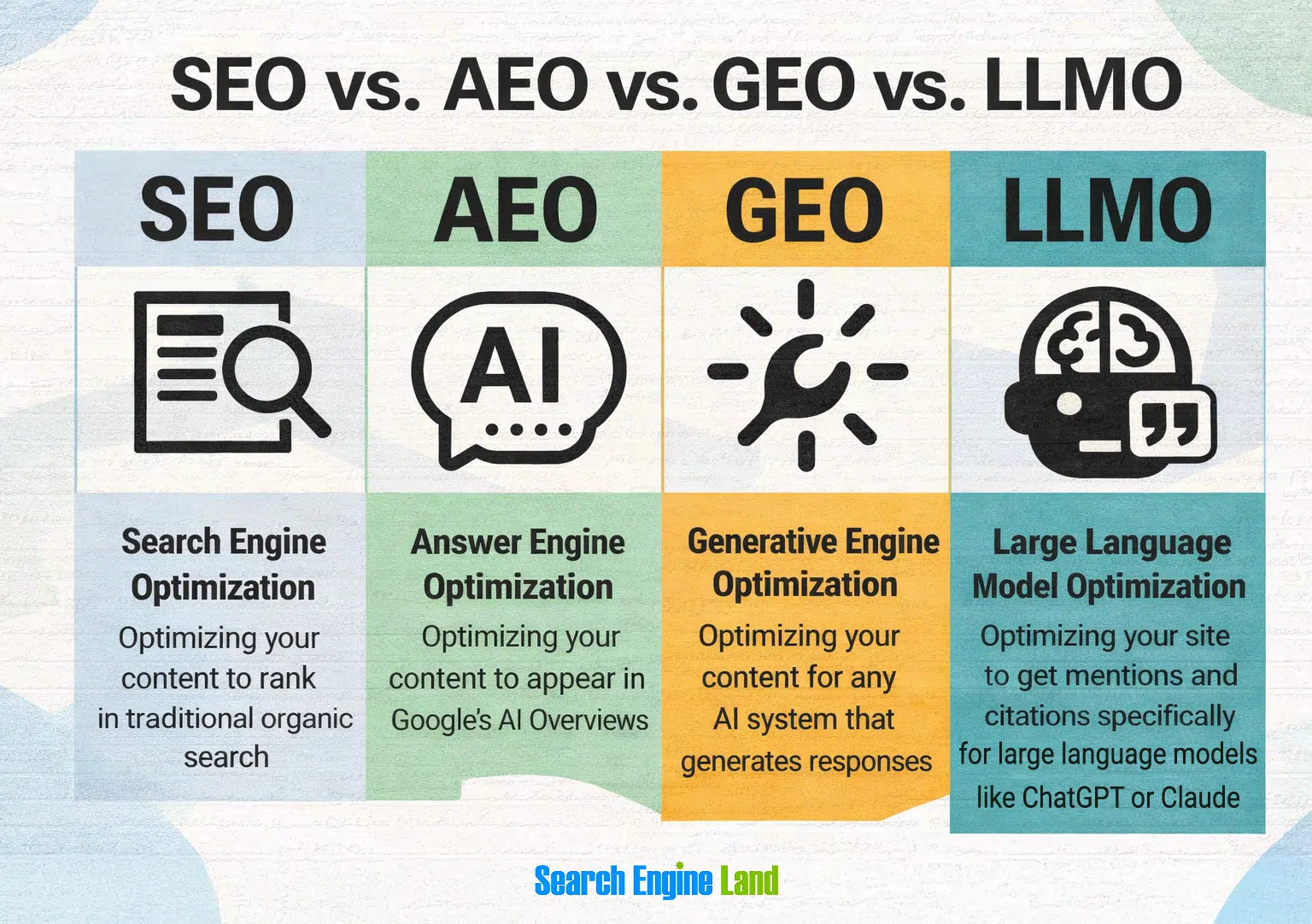
Image courtesy: searchengineland.com
The key difference between traditional SEO and AI SEO?
Traditional SEO focuses on search engine results pages, while AI SEO is all about appearing in AI-generated answers from tools like ChatGPT and Google's AI Overviews.
So, it's crucial to optimize for both traditional search engines and AI platforms. This means understanding your target audience and their intent behind keyword or prompt searches.
Getting noticed in an AI-driven world demands more than keywords—it requires smart structure, schema, and forward-thinking content. Let’s break down what’s changing.
For years, SEO—Search Engine Optimization—has been the backbone of digital visibility. It's a careful balancing act of technical tweaks, keyword placement, and backlink strategies aimed at climbing search rankings. But here's the twist: AI-powered search tools like Google's Gemini, Perplexity, and ChatGPT are rewriting the rules.
Ranking first on Google still matters. But what happens when users get answers directly from AI summaries instead of clicking links? That’s where Answer Engine Optimization (AEO) comes in. Your CMS isn’t just a website builder anymore—it needs to speak clearly to both humans and AI systems.
We’ll unpack how AEO works, why it’s not a replacement for SEO, and how marketers can future-proof their strategies.
💡What is AEO?Short for Answer Engine Optimization, AEO focuses on making content AI-friendly—so tools like ChatGPT or Gemini can pull direct answers from your material. Imagine your content showing up in voice search responses or AI-generated summaries without needing a click. That’s the zero-click reality we’re stepping into. Unlike SEO’s crawl-focused tactics, AEO prioritizes clarity and authority. AI systems hunt for the most accurate, concise answer fast—think bullet points over lengthy essays. In other words: SEO gets you traffic; AEO gets your content quoted. |
Is AEO replacing SEO?
AEO isn’t a replacement—it’s an evolution. Traditional SEO still drives clicks, but AI demands more from content. Instead of fighting old tactics, we’re building on them.
AEO pushes us to rethink content structure. We’re no longer optimizing just for search bots but also for AI models parsing meaning. This means:
- Chunking data into digestible, machine-readable pieces
- Using schema markup to explain context—not just keywords
- Tying content to clear entities (like products, people, or locations) AI can recognize
- Creating answers that work in voice assistants, summaries, and chatbots
SEO tells search engines your page exists. AEO tells AI what your page means. Both matter now more than ever.
Do I need both AEO and SEO?
Short answer: yes. Think of them as a tag team. SEO builds a solid foundation—without it, AEO has nothing to work with. But AEO amplifies your reach by making content AI-accessible. To ensure your brand is visible on traditional SEO search engines and within AI optimization systems. People still use Google and Bing daily, with Google alone handling five trillion searches per year. But Semrush data suggests traffic from large language models will surpass traditional organic search traffic by 2028.
- SEO handles discovery: Technical setup, crawlability, keyword targeting—this keeps your site visible. Skimp on SEO, and your content vanishes from both search results AND AI feeds.
- AEO unlocks new channels: Once found, AI needs to understand your content. Nail this, and your brand appears in AI Overviews, voice answers, and chatbot responses. That’s visibility beyond clicks.
Neglect either, and you’re leaving opportunities on the table. SEO drives traffic; AEO future-proofs your brand. Top CMS platforms are already blending both—why aren’t you?
Key Differences Between AEO and SEO
| Focus Area | SEO | AEO |
| Where It Works | Google, Bing, Yahoo | ChatGPT, Gemini, AI Overviews |
| End Goal | Rank high on search pages | Get cited in AI answers |
| Winning Tactics | Backlinks, keywords, and site speed | Structured data, clear answers, authority |
| Content Style | Blogs, landing pages | FAQs, summaries, knowledge bases |
| Success Metrics | Clicks, time on site | AI mentions, citations, voice results |
Measuring AEO Success
Traditional SEO metrics still count, but AEO adds fresh ways to track impact. Here’s what to watch:
- AI Visibility Score: How often does your content show up in AI summaries? Tools are emerging to track this—early adopters win.
- Citation Frequency: Are AI models naming your site as a source? Bonus points if they quote you as a niche authority.
- Featured Snippet Wins: These bite-sized answer boxes aren’t just SEO gold—they’re AI training data.
- Semantic Clarity Tests: Does AI understand your core topics? Use tools that analyze entity recognition in your content.
- Traffic from AI Referrals: New analytics dashboards will track this soon. Start preparing now.
SEO Web Analyst Blog curator is built for this shift.
Recommended Read: AI Content writer for SEO and blogging
The Bottom Line
Here’s the deal: SEO keeps your site findable. But with chatbots and voice assistants booming, AEO keeps your content relevant in those instant answers.
AEO isn’t killing SEO—it’s pushing it forward. Just like SEO evolved from keyword stuffing to user intent, AEO is the next leap.
Marketers need both. Keep SEO strong for traffic. Boost AEO for AI visibility. A complete strategy aims to capture visibility across the entire search ecosystem. By incorporating AI SEO into your workflow, you can expand your online presence and reach a wider audience. And that’s where the real edge lies.